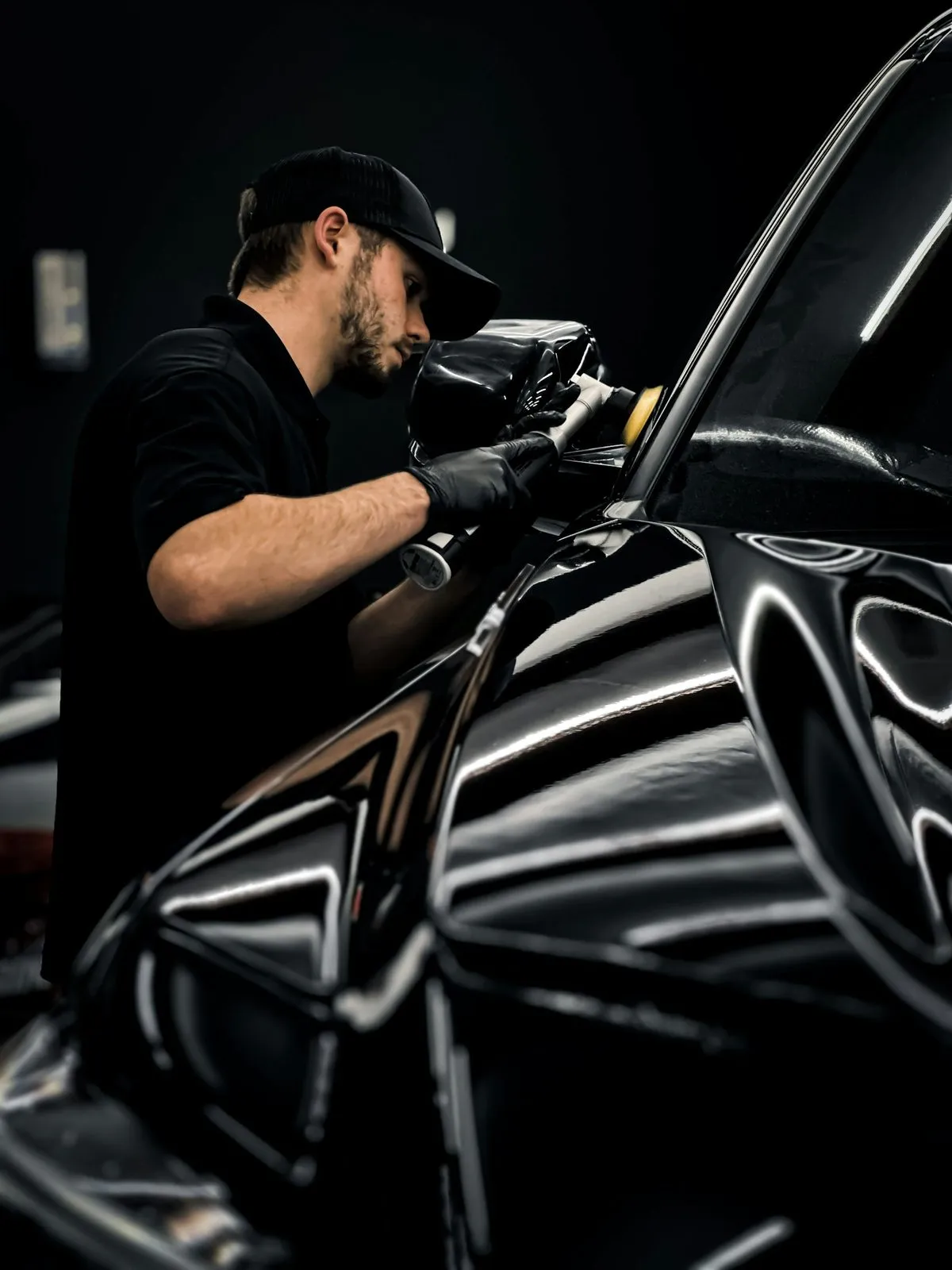
Headlight polishing and restoration
Modern headlights are made of polycarbonate plastic with a UV-protective coating applied at the factory. Over the years sun, road grit, salt and car-wash brushes wear that coating away. The lens turns hazy and yellow and the beam scatters, so the road is lit less well at night and oncoming drivers get more glare.
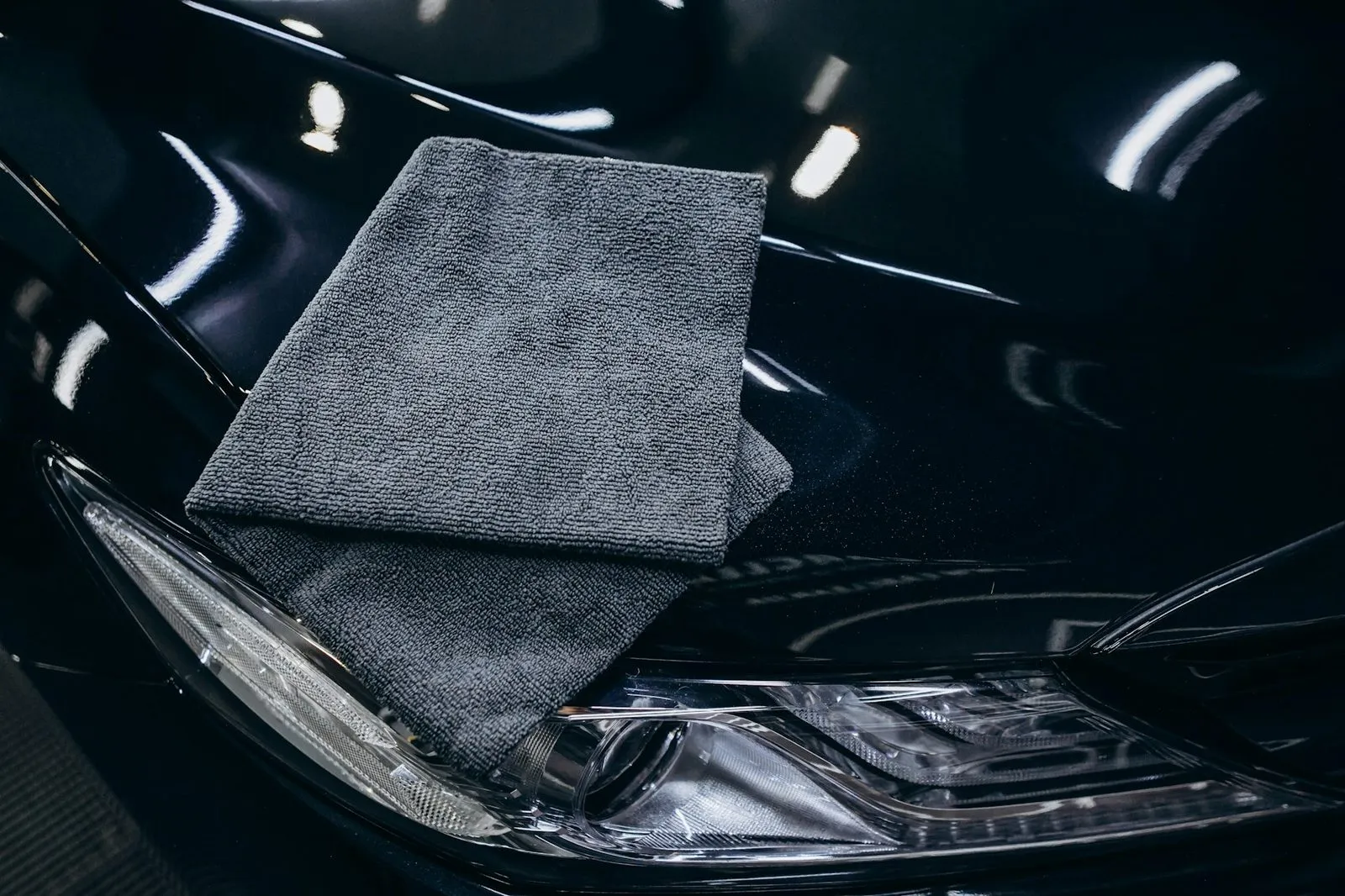
Polishing brings the clarity back. We clean the headlight, mask the paint around it, sand the damaged surface layer with progressively finer abrasives and machine-polish the lens. It is usually far cheaper than a new headlight.
If the factory coating has already worn through, polishing alone may not last long, because unprotected plastic clouds over again in the sun. We inspect the headlights first and tell you what to expect.
Polishing will not help if the lens is cracked, there is moisture or condensation inside the headlight, the reflector is damaged or the housing broke in an accident. In that case the headlight needs repair or replacement – after an accident we include it in the insurance claim estimate.
Car paint polishing
Paint polishing restores gloss and removes defects in the clear coat: swirl marks from car-wash brushes, holograms, water spots and light scuffs. Before we start we measure the paint thickness, so we know how much clear coat there is to work with and whether the panel has been repainted – and we never polish through the clear coat on edges and corners.
We polish in stages: a cutting stage removes scratches and dullness, a finishing stage brings out a deep gloss, and we check the surface under light from different angles. One stage is often enough to refresh the gloss; more defects need more stages.
Scratch removal – polish or paint?
Run a fingernail across the scratch. If it glides over, the scratch is probably in the clear coat and can be polished out. If it catches, the scratch is deeper – polishing will make it less visible but may not remove it completely.
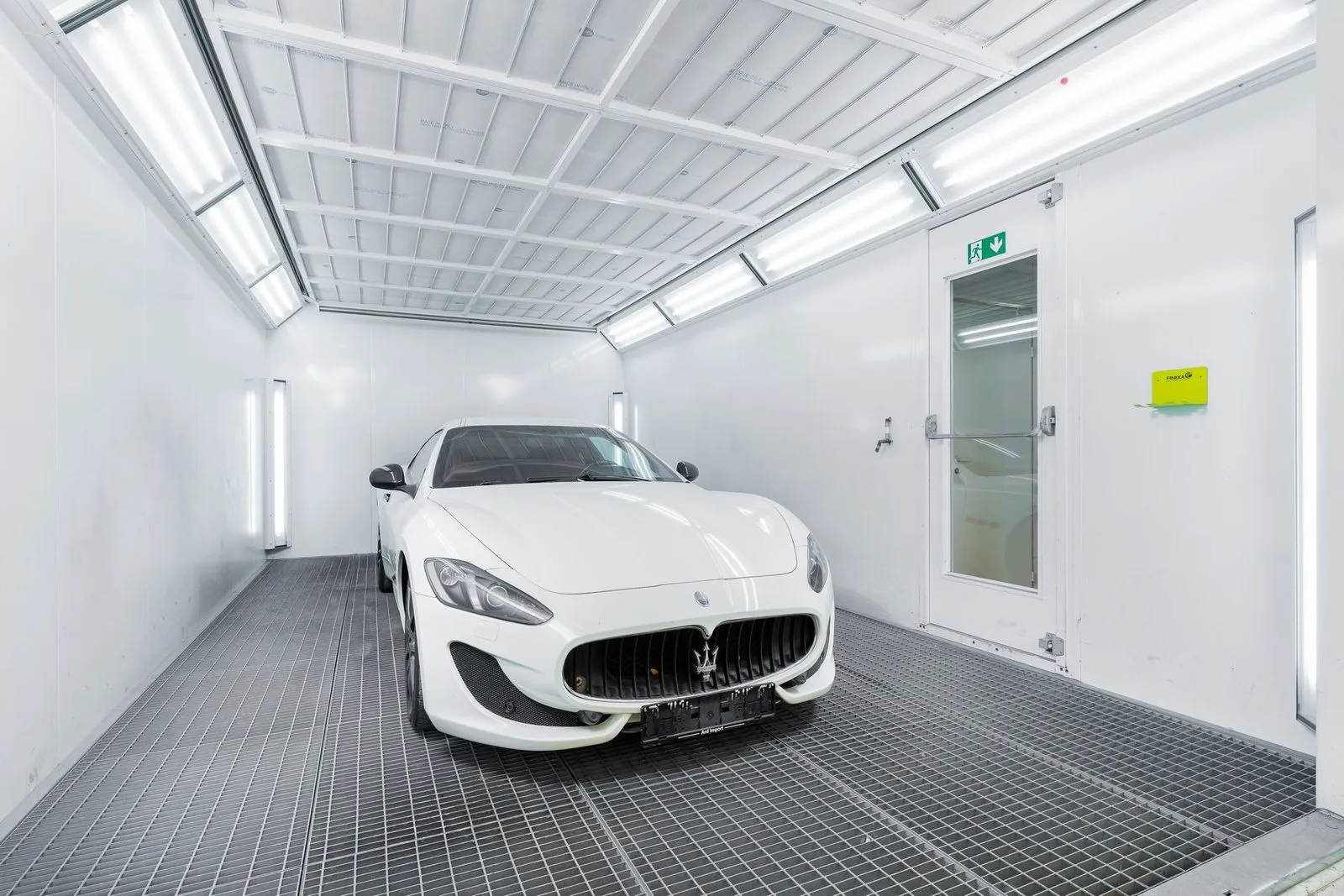
If you can see grey or white primer or bare metal, the paint is damaged right through and the area needs a paint repair – see car painting. For a dent with intact paint, paintless dent removal is the better fix. Polishing, bodywork and our paint booth are all under one roof, so we simply suggest the smallest repair that gives a proper result.
Polishing after painting and repairs
Polishing is also the final step of our paintwork: where needed we polish the blend areas and remove dust nibs so the new paint matches the rest of the car. When polishing is part of an insured repair, we include it in the CABAS estimate and agree it with the insurer.
Polishing prices – what affects the cost
The price depends on what needs polishing and what condition it is in. A single panel, a pair of headlights and a full body polish are very different jobs.
| What affects the price | What it means |
|---|---|
| One headlight or both | Whether one headlight or both need polishing. |
| Headlight condition | Light haze comes off faster; deep yellowing and a worn-out coating need more preparation. |
| Size of the car | An SUV or van has more surface area than a small car and takes longer. |
| Paint condition | One stage often refreshes the gloss; deeper scratches and dullness need several stages. |
| Area to polish | A single panel such as a bonnet or door costs less than polishing the whole body. |
| Previous repairs | If a panel has been repainted, we measure the paint and choose the polishing method accordingly. |
Send photos of the headlights or the area you want polished, with the make and model of your car, and we will give you a price before any work starts.
Why Avariiautoremont
Our workshop is at Telliskivi 57D in North Tallinn, about 5 minutes from Balti jaam (Baltic Station), open Mon–Fri 8:30–17:30.
- Repairing cars since 2002
- Headlight and paint polishing
- Paint thickness measured before polishing
- Our own paint booth for anything polishing cannot fix
- We work with all insurers, estimates in CABAS
- Cars, SUVs and vans